@SRR001666.1 071112_SLXA-EAS1_s_7:5:1:817:345 length=60
GGGTGATGGCCGCTGCCGATGGCGTCAAATCCCACCAAGTTACCCTTAACAACTTAAGGG
+SRR001666.1 071112_SLXA-EAS1_s_7:5:1:817:345 length=60
IIIIIIIIIIIIIIIIIIIIIIIIIIIIII9IG9ICIIIIIIIIIIIIIIIIIIIIDIII
@ line: basic read information+ metadata line
In [ ]:


f = open("files/simple-file.txt")
for l in f.readlines():
    print(l,end="")
f.close()
In [ ]:


with open("files/simple-file.txt") as f:
    for l in f:
        print(l.strip())
with open("files/simple-file.txt") as f:
    for l in f:
        do_something(l)
This bizarro syntax goes through the file line-by-line, wiping out each old line with the new one.
In [ ]:


with open("files/simple-file.txt.gz") as f:
    for l in f:
        print(l.strip())
In [ ]:


import gzip

with gzip.open("files/simple-file.txt.gz") as f:
    for l in f:
        l_ascii = l.decode("ascii")
        print(l_ascii.strip())
import gzip

with gzip.open("files/simple-file.txt.gz") as f:
    for l in f:
        l_ascii = l.decode("ascii")
        print(l_ascii.strip())
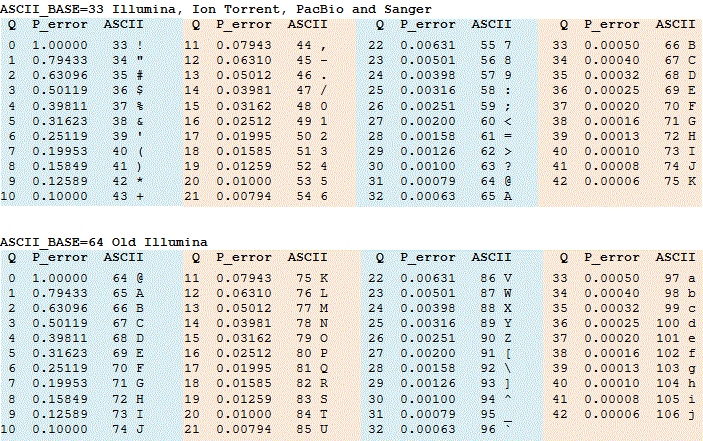
gzip.open is just like open except it takes a .gz filel.decode("ascii") species that the binary blob that just came out of the file is normal textfiles/example.fastq.gz? 1.00000 (encoded as the letter 0) to 0.00006 (encoded by the letter K). Sum up the score for all bases in the alignment. Table is here: (http://www.drive5.com/usearch/manual/qscores.gif)@SRR001666.1 071112_SLXA-EAS1_s_7:5:1:817:345 length=60
GGGTGATGGCCGCTGCCGATGGCGTCAAATCCCACCAAGTTACCCTTAACAACTTAAGGG
+SRR001666.1 071112_SLXA-EAS1_s_7:5:1:817:345 length=60
IIIIIIIIIIIIIIIIIIIIIIIIIIIIII9IG9ICIIIIIIIIIIIIIIIIIIIIDIII
In [ ]:
In [ ]: